Chip-Level Mobile Repair in Kochi: Why Component-Level Diagnostics Save Your Smartphone
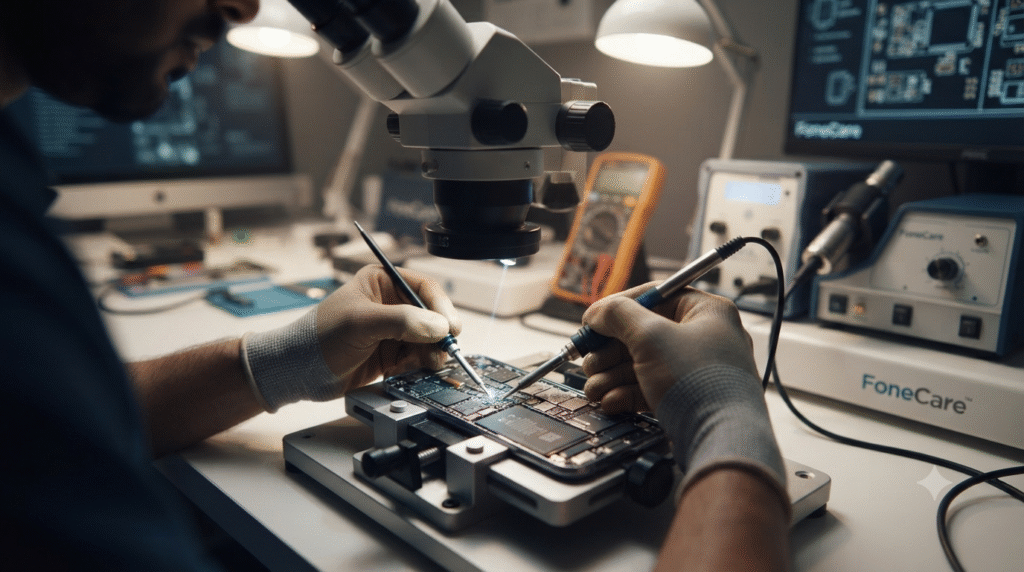
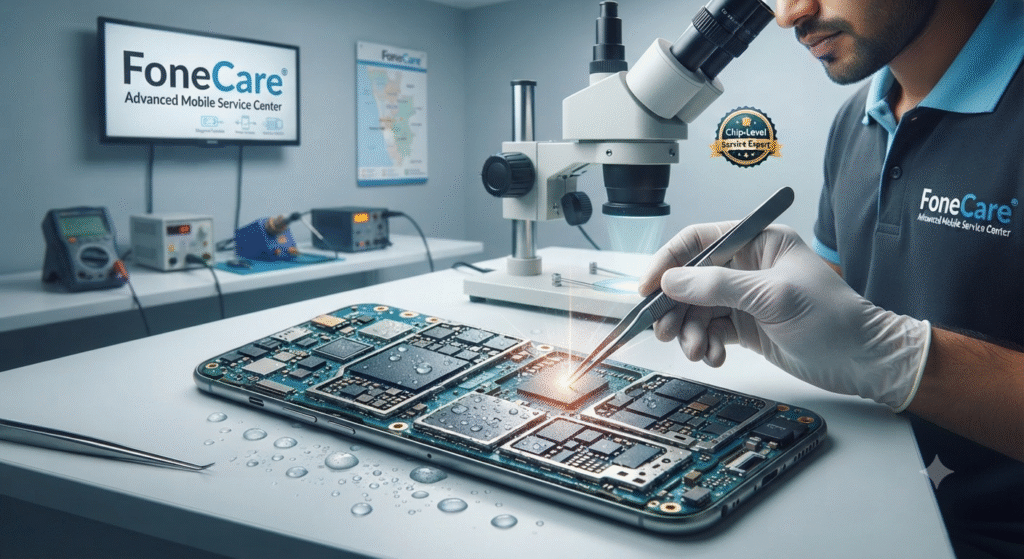
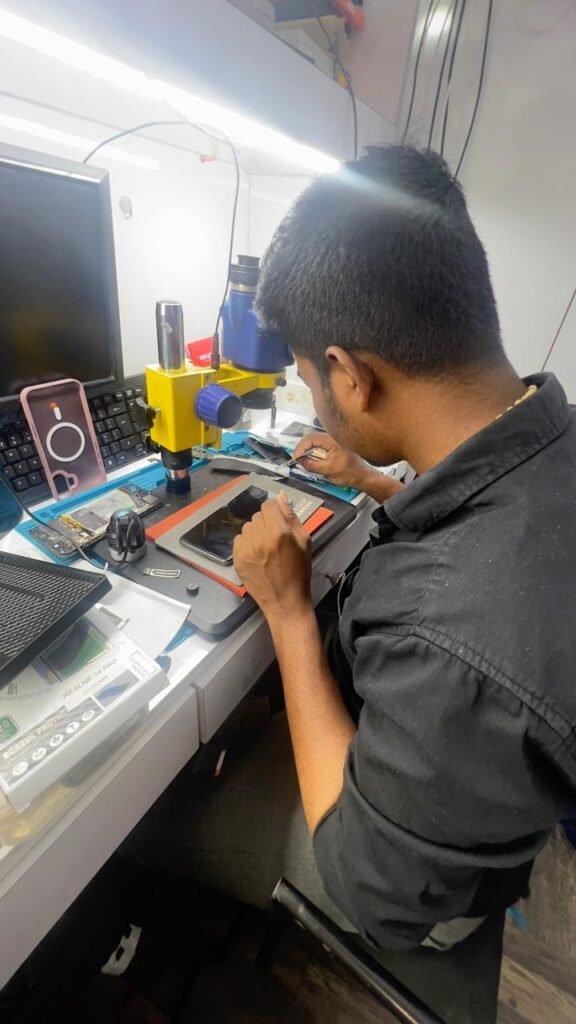
Chip-Level Mobile Repair in Kochi: Why Component-Level Diagnostics Save Your Smartphone Book your service NOW The modern smartphone is a marvel of miniaturized engineering. Packed inside a sleek aluminum or glass chassis are billions of transistors, delicate flex cables, and multi-layered printed circuit boards (PCBs) capable of processing millions of instructions per second. However, this extreme level of integration also means that when something goes wrong, the margin for error is razor-thin. When a device refuses to power on, suffers from sudden battery drain, or blanks out after water exposure, the traditional approach of swapping out entire assemblies is often exorbitantly expensive or entirely ineffective. For smartphone users across Ernakulam, finding a reliable technical center that understands the intricate physics of micro-electronics is essential. Rather than discarding a high-value device due to a localized circuit failure, expert technicians can diagnose and rectify faults at the microscopic level. Understanding the mechanics of advanced troubleshooting reveals why choosing specialized mobile repair services in Kochi can extend your device’s lifespan and protect your investment. The Evolution of Smartphone Architecture: Beyond Modular Swaps A decade ago, repairing a mobile phone was a straightforward mechanical task. Devices featured modular components attached with standard connectors, and troubleshooting usually meant replacing a cracked screen or a worn-out battery unit. Today, manufacturers like Apple, Samsung, OnePlus, and Google integrate core processors, power management ICs (PMICs), and memory modules onto compact, densely packed motherboards using ball grid array (BGA) soldering techniques. When an authorized service center encounters a motherboard fault—such as a shorted capacitor or a failed power management chip—they rarely attempt component-level intervention. Instead, their standard policy is a complete motherboard replacement, which often costs nearly as much as purchasing a brand-new device. This is where specialized independent technical hubs fill a critical market gap. By utilizing advanced diagnostics, thermal imaging, and precision micro-soldering gear, technicians can isolate the exact point of failure without discarding the rest of the healthy hardware. Common Motherboard and IC Failures Requiring Precision Diagnostics Micro-circuitry failures manifest in various ways, often masquerading as simple software glitches or dead batteries. Recognizing these symptoms helps users seek targeted interventions early: Power Management IC (PMIC) Failure: Phones that abruptly shut down, refuse to charge past a specific percentage, or get excessively hot near the processor often suffer from a failing PMIC. This requires microscopic re-balling or replacement of the power controller chip. Audio and Touch IC Faults: Classic symptoms include unresponsive touch panels despite screen replacements or audio loops during calls, frequently traced back to cracked solder joints under the controller chips due to minor drops. Baseband and Network Drop Issues: Loss of cellular service, persistent “No Service” errors, or grayed-out Wi-Fi toggles often point to baseband IC damage or fractured traces underneath the RF shield. Bootloop and CPU Delamination: Severe physical drops or thermal stress can cause microscopic fractures in the solder balls connecting the applications processor to the board, trapping the phone in an endless reboot loop. To explore how technical workshops handle these intricate hardware revivals, you can review our detailed breakdown on mobile repair tips and updates, which highlights diagnostic procedures for both Android and iOS ecosystems. The Technical Anatomy of Micro-Soldering and Diagnostic Equipment Executing successful circuit-level restoration demands specialized laboratory infrastructure. Standard soldering irons used for basic electrical wiring are completely ineffective on modern smartphones, where component pitches are measured in fractions of a millimeter. Professional service labs utilize high-magnification trinocular stereo microscopes that allow technicians to view microscopic circuits in real-time. Paired with adjustable hot-air rework stations, precision micro-tweezers, and UV-curable solder mask resins, technicians can rebuild torn PCB traces, replace microscopic surface-mount device (SMD) resistors, and jumper broken connections with absolute precision. Furthermore, DC power supply units with short-circuit current limiters enable safe fault tracing by injecting controlled voltage into a dead board and observing thermal signatures using infrared cameras. Water Damage Recovery: Why Immediate Chemical and Ultrasonic Cleaning Matters Liquid ingress is one of the leading causes of sudden device failure in humid coastal regions like Kerala. When water enters a live smartphone circuit, minerals dissolved in the liquid accelerate electrochemical migration, causing rapid copper trace corrosion and localized short circuits. Many users rely on unverified home remedies, such as submerging wet phones in raw rice. Unfortunately, starch particles and dust from rice grains often infiltrate open ports, combining with moisture to form a concrete-like residue that accelerates internal corrosion. Professional water damage recovery requires an entirely different protocol: Immediate disconnection of the lithium-ion battery to halt active electrical electrolysis. Complete disassembly of the device down to the bare motherboard. Decontamination of circuit boards in specialized ultrasonic baths using high-grade isopropyl alcohol and proprietary anti-corrosive solvents to strip away mineral deposits. Inspection under magnification to repair corroded traces and replace compromised passive components. For more insights into handling unexpected fluid accidents, read our guide on advanced smartphone water damage recovery and data restoration. The Cost-Benefit Analysis: Repair vs. Replacement In an era dominated by electronic waste and planned obsolescence, repairing a high-end smartphone makes both economic and environmental sense. Flagship devices from Apple and Samsung represent substantial investments; replacing them prematurely burdens both personal finances and ecological systems. Component-level restoration typically costs a fraction of a new device purchase or a factory motherboard replacement. By preserving original factory displays, cameras, and housing, users retain the authentic user experience while keeping fully functional electronics out of municipal landfills. Conclusion Smartphone technology will only continue to grow more complex, making specialized micro-electronics expertise an invaluable asset. When your device encounters severe hardware malfunctions, motherboard failures, or liquid damage, settling for superficial fixes is rarely a permanent solution. Entrusting your device to skilled technicians who possess deep diagnostic capabilities ensures that complex faults are resolved at their root. Located in the heart of Ernakulam, FoneCare combines over a decade of hands-on electronics experience with advanced laboratory tools to deliver transparent, reliable, and precise device restoration. Whether you are dealing with a dead logic board, a persistent charging fault, or
Chip-Level Mobile Repair in Kochi: Why Component-Level Diagnostics Save Your Smartphone Read More »